Tarangire National Park – The Land of Giants
Overview
Tarangire National Park is one of Tanzania’s most beautiful and rewarding safari destinations, famous for its large elephant herds, ancient baobab trees, seasonal wildlife concentrations and spectacular savannah landscapes.
Located in northern Tanzania, Tarangire is an important part of the Northern Safari Circuit and is often combined with Lake Manyara, Ngorongoro Crater and Serengeti.
The park is especially impressive during the dry season, when wildlife gathers around the Tarangire River, one of the area’s most important permanent water sources.
📍 Where Is Tarangire National Park?
Tarangire National Park is located in northern Tanzania, primarily within Manyara Region.
It is approximately:
- 115–120 km from Arusha
- About 2–3 hours by road from Arusha
- Near Lake Manyara National Park
- South of the main Northern Circuit route toward Ngorongoro and Serengeti
Its location makes it an excellent first or final destination on a Northern Tanzania safari.
A popular safari route is:
Arusha → Tarangire → Lake Manyara → Ngorongoro → Serengeti
🗓️ When Was Tarangire National Park Established?
Tarangire was established as a national park in 1970.
Before becoming a national park, the area was protected as a game reserve.
Today, it is managed by the Tanzania National Parks Authority (TANAPA).
📏 How Large Is Tarangire National Park?
Tarangire National Park covers approximately 2,850 km².
The park’s landscape includes:
- Open grasslands
- Seasonal wetlands
- Acacia woodlands
- Baobab forests
- River valleys
- Swamps
- Rocky areas
The Tarangire River is the park’s most important permanent water source and plays a major role in attracting wildlife during the dry season.
🐘 Why Is Tarangire Famous?
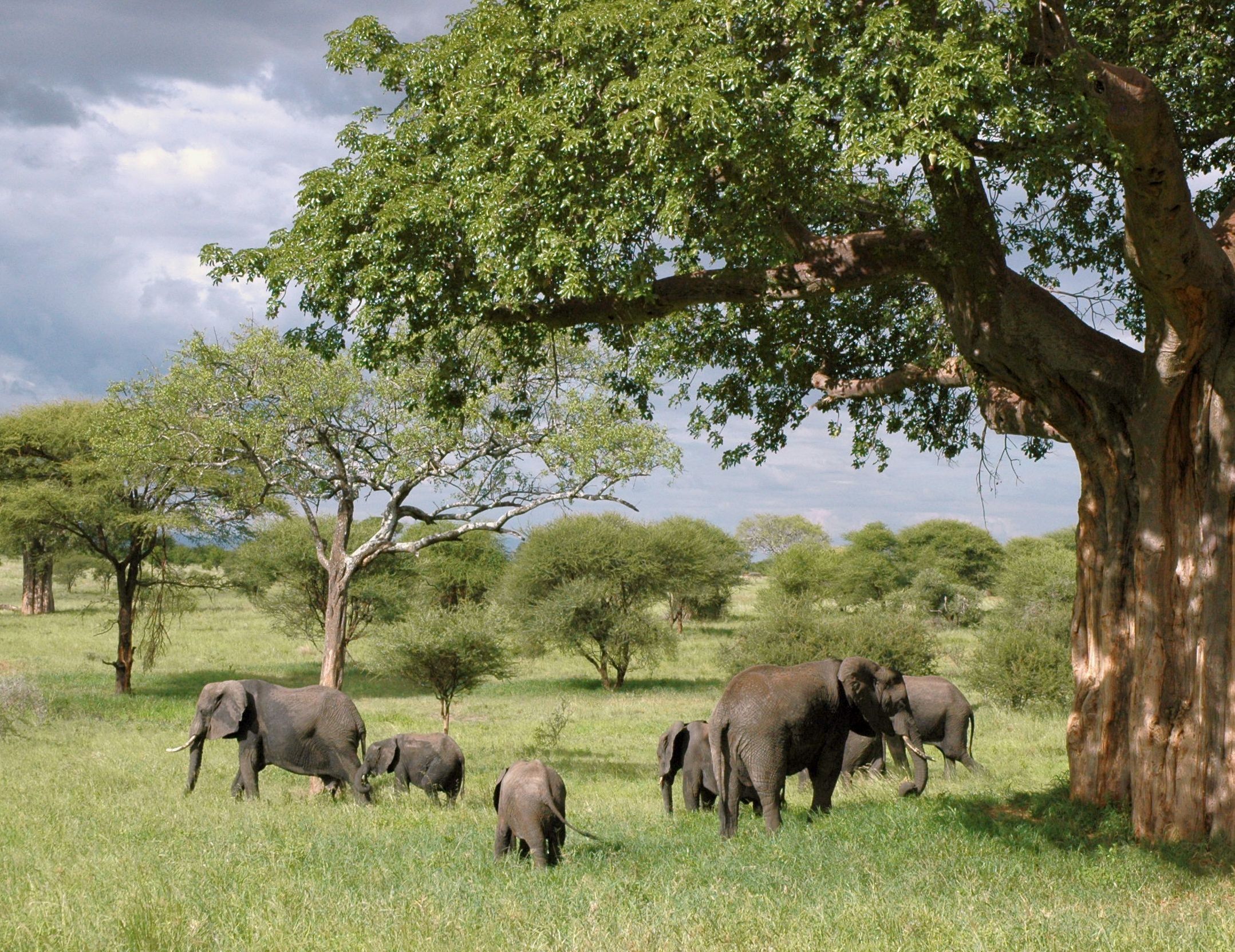
Tarangire is particularly famous for its elephants.
Large elephant herds can often be seen moving across the park, feeding beneath trees or gathering around water.
The park is also famous for its enormous baobab trees, which create one of the most distinctive landscapes in Tanzania.
For this reason, Tarangire is sometimes described as:
“The Land of Giants.”
🐘 Elephants of Tarangire
Elephants are one of Tarangire’s greatest attractions.
During the dry season, large numbers of elephants and other animals are drawn toward the Tarangire River and other remaining water sources.
Visitors may see elephants:
- Walking across the plains
- Feeding beneath baobabs
- Drinking at the river
- Playing in mud
- Moving in family groups
- Crossing safari roads
This makes Tarangire an excellent destination for elephant photography.
🌳 Baobab Trees
Tarangire is famous for its spectacular African baobab trees.
These enormous trees can live for hundreds or even thousands of years and are one of the most recognizable features of the African savannah.
The combination of:
Baobabs + elephants + golden grasslands
creates some of the most iconic safari scenery in Tanzania.
🦁 Wildlife in Tarangire
Tarangire has an impressive variety of wildlife.
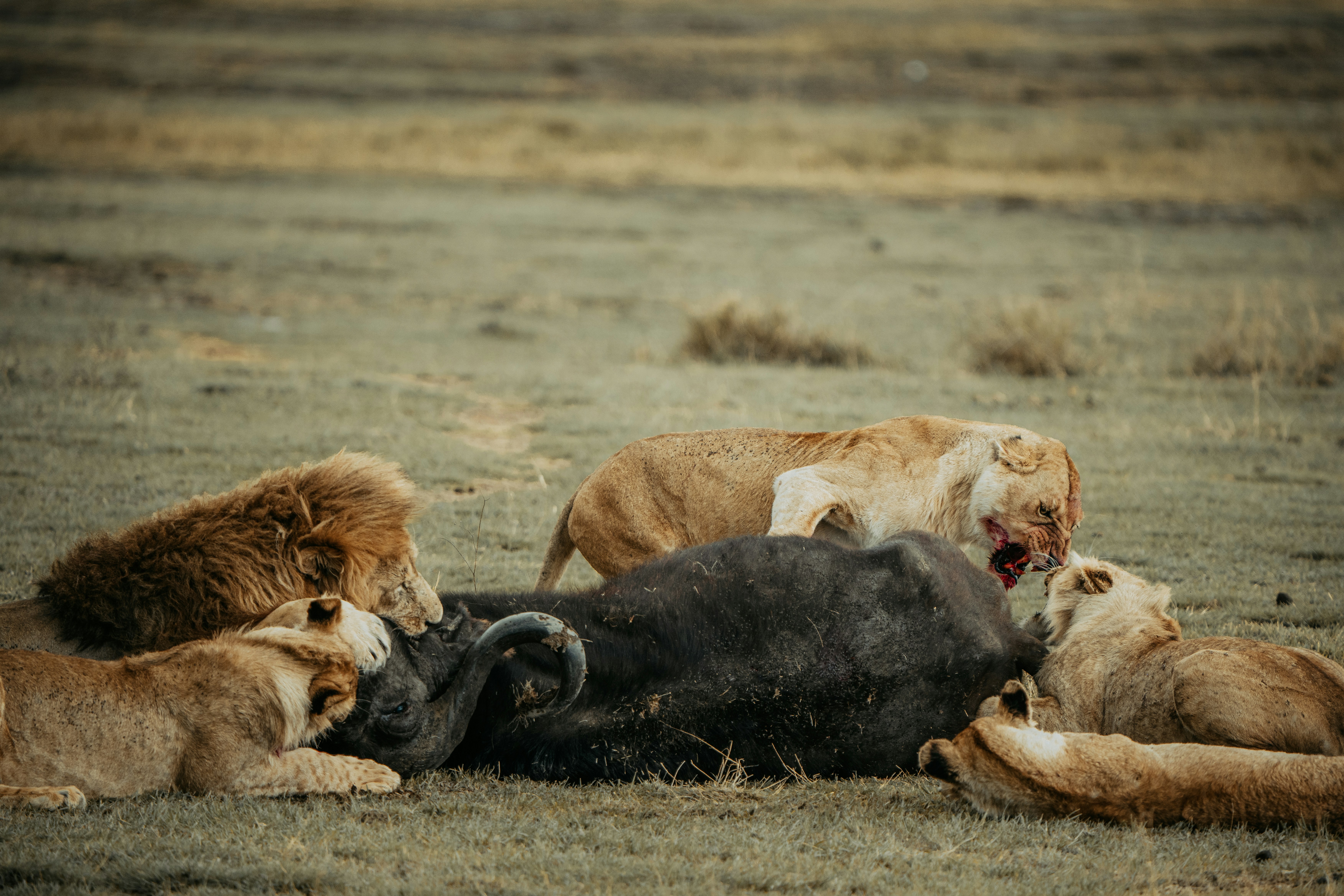
🦁 Lions
Lions are regularly seen in Tarangire.
They often follow large concentrations of prey and may be found resting under trees during the heat of the day.
🐆 Leopards
Leopards are present but are more difficult to spot because they are solitary and elusive.
🐆 Cheetahs
Cheetahs can be found in the park, particularly in open areas where they can use their speed to hunt.
🦒 Giraffes
Giraffes are commonly seen throughout Tarangire, especially around woodland and open savannah.
🦬 Buffalo
Large buffalo herds can be found around grasslands and water sources.
🦓 Zebras
Zebras are among the common herbivores found in Tarangire.
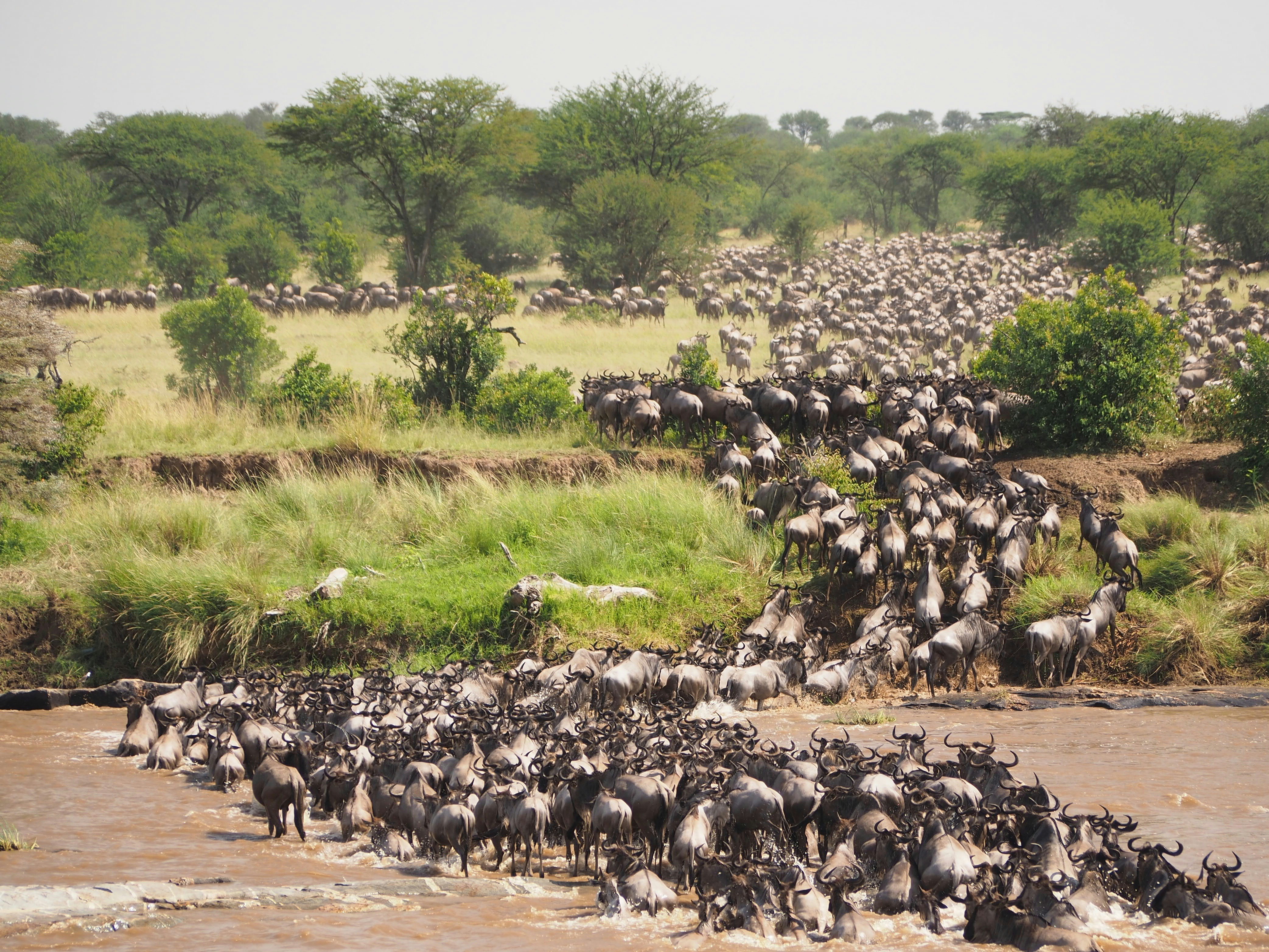
🐃 Wildebeest
Wildebeest can be seen moving through the park, particularly when seasonal conditions bring them into the area.
🐗 Warthogs
Warthogs are commonly encountered around open grasslands.
🦌 Special Antelope Species
Tarangire is particularly interesting for travelers interested in antelope.
You may encounter:
- Greater kudu
- Lesser kudu
- Eland
- Oryx
- Gerenuk
- Impala
- Waterbuck
- Dik-dik
- Grant’s gazelle
- Hartebeest
Some of these species are less frequently encountered in other Northern Circuit parks, making Tarangire a valuable addition to a safari.
🐒 Primates
Tarangire is also home to several primate species.
Visitors may encounter:
- Baboons
- Vervet monkeys
- Olive baboons
- Other smaller primates
🦅 Birds of Tarangire
Tarangire is an excellent destination for birdwatching.
The park’s varied habitats support hundreds of bird species.
Possible sightings include:
- Kori bustard
- Secretary bird
- African fish eagle
- Bateleur
- Lilac-breasted roller
- Hornbills
- Vultures
- Ostriches
- Starlings
- Bee-eaters
- Kingfishers
- Herons
- Egrets
The park is particularly attractive to birdwatchers during the green season when vegetation and water sources support abundant birdlife.
🌊 Tarangire River
The Tarangire River is the lifeline of the park.
During the dry season, water becomes scarce in many surrounding areas. Animals therefore move toward the river and other remaining water sources.
This seasonal concentration can make Tarangire particularly rewarding for wildlife viewing.
Animals commonly seen around the river include:
- Elephants
- Buffalo
- Giraffes
- Zebras
- Wildebeest
- Antelope
- Lions
- Warthogs
🌿 Tarangire Ecosystem
The park is part of a much larger ecosystem extending beyond its official boundaries.
Many animals move seasonally between Tarangire and surrounding areas in response to rainfall, food and water availability.
This means the number and distribution of wildlife inside the park can change considerably throughout the year.
🚙 Things to Do in Tarangire
🐘 Game Drives
Game drives are the main activity.
Explore the park with an experienced safari guide while searching for elephants, lions, giraffes, buffalo, zebras and many other species.
📸 Wildlife Photography
Tarangire’s combination of elephants, baobabs and open landscapes creates excellent photography opportunities.
🦅 Birdwatching
Discover the park’s diverse birdlife with an experienced guide.
🌿 Nature Experiences
Learn about the park’s ecosystems, plants and wildlife.
🧑🏿🌾 Cultural Experiences
Tarangire can be combined with cultural experiences in nearby communities, depending on the itinerary.
🗓️ Best Time to Visit Tarangire
June – October ⭐⭐⭐⭐⭐
This is generally considered the best period for wildlife viewing.
The dry conditions cause animals to concentrate around the Tarangire River and other available water sources.
November – December
The short rains bring fresh vegetation and beautiful green landscapes.
January – February
The park can be quieter and green, with good birdwatching opportunities.
March – May
The long rains create lush scenery, although some roads can become more challenging.
🐘 Why Visit During the Dry Season?
During the dry season:
Water decreases → animals concentrate around remaining water → wildlife becomes easier to locate.
This is one of the reasons Tarangire can be particularly rewarding between June and October.
🏕️ How Long Should You Stay?
1 Day
A full-day safari is suitable for travelers with limited time.
2 Days / 1 Night ⭐
A better option if you want more time for game drives and a more relaxed experience.
3 Days / 2 Nights
Ideal for travelers who want to explore Tarangire thoroughly or combine it with nearby destinations.
🚗 How to Get to Tarangire
From Arusha
Tarangire is easily accessible by road from Arusha.
The journey normally takes approximately 2–3 hours, depending on your starting location and road conditions.
From Lake Manyara
Tarangire and Lake Manyara are conveniently combined in a Northern Circuit itinerary.
By Air
Charter and scheduled flights can serve safari airstrips in the wider area, depending on the airline and itinerary.
⭐ Main Highlights of Tarangire
✓ Large elephant herds
✓ Ancient baobab trees
✓ Tarangire River
✓ Lions
✓ Leopards
✓ Cheetahs
✓ Giraffes
✓ Buffalo
✓ Zebras
✓ Wildebeest
✓ Gerenuk
✓ Oryx
✓ Greater kudu
✓ Large variety of birds
✓ Beautiful savannah landscapes
✓ Excellent dry-season wildlife viewing
✓ Easy combination with Lake Manyara and Ngorongoro
🦁 Tarangire vs Lake Manyara
| Tarangire | Lake Manyara |
|---|---|
| Approximately 2,850 km² | Approximately 330 km² |
| Famous for elephants | Famous for tree-climbing lions |
| Famous for baobabs | Famous for lake and groundwater forest |
| Excellent dry-season wildlife | Excellent diverse habitats |
| Large open savannah | Forest, lake and Rift Valley landscapes |
| Excellent elephant photography | Excellent birdwatching |
Both parks are excellent, and they complement each other very well.
🌍 Why Visit Tarangire With Swallowtail Adventure?
At Swallowtail Adventure, we can make Tarangire part of a short safari or a complete Northern Tanzania adventure.
We offer:
✓ 1-day Tarangire safari
✓ 2–3 day Tarangire safari
✓ Private safaris
✓ Family safaris
✓ Honeymoon safaris
✓ Wildlife photography safaris
✓ Birdwatching
✓ Cultural experiences
✓ Tarangire + Manyara
✓ Tarangire + Ngorongoro
✓ Tarangire + Serengeti
✓ Full Northern Circuit safaris
✓ Safari + Zanzibar holidays
✓ Experienced safari guides
✓ 4×4 safari vehicles
✓ Accommodation
✓ Airport and hotel transfers
✓ Customized itineraries