Serengeti National Park is one of Africa’s most famous wildlife destinations and the heart of Tanzania’s legendary Great Wildebeest Migration. The name Serengeti comes from the Maasai word “Siringet,” meaning “the endless plains.” The park is famous for its vast grasslands, spectacular wildlife, large populations of predators, and one of the world’s greatest natural wildlife spectacles.
Serengeti is located in northern Tanzania, and it forms the central part of the larger Serengeti–Mara ecosystem, which extends toward Kenya’s Maasai Mara.
📍 Where Is Serengeti National Park Located?
Serengeti National Park is in northern Tanzania, within the country’s famous Northern Safari Circuit.
It is bordered by several important wildlife areas, including:
- Ngorongoro Conservation Area to the southeast
- Maswa Game Reserve to the south
- Grumeti and Ikorongo areas toward the west
- Maasai Mara National Reserve in Kenya to the north
The park itself covers approximately 14,763 km² (5,700 square miles). UNESCO lists the protected property at about 1,476,300 hectares.
The larger Serengeti ecosystem is much bigger than the national park itself and covers roughly 30,000–35,000 km², depending on how its boundaries are defined.
🗓️ When Was Serengeti Established?
There are several important dates in the history of Serengeti, so it is useful to explain them correctly.
1929 – Game Reserve
The central Serengeti area was declared a Game Reserve in 1929.
1951 – National Park
In 1951, the area became Tanganyika’s first national park, and at that time the park also included what is now the Ngorongoro Conservation Area.
1959 – Serengeti Takes Its Modern Form
In 1959, the Serengeti National Park was separated from the newly established Ngorongoro Conservation Area, creating the modern arrangement of the two protected areas.
1981 – UNESCO World Heritage Site
Serengeti was inscribed as a UNESCO World Heritage Site in 1981, recognizing its exceptional biodiversity and the Great Migration.
For your website, the simplest wording is:
“Serengeti was established as a national park in 1951, following its earlier designation as a game reserve in 1929. Its boundaries were reorganized in 1959 when the Ngorongoro Conservation Area was separated from the park.”
📏 How Large Is Serengeti?
Serengeti National Park covers approximately:
14,763 km²
That is approximately 1.48 million hectares.
The landscape is not just one huge grassland. It contains a remarkable mixture of:
- Open grasslands
- Savannah
- Woodlands
- Riverine forests
- Rivers
- Seasonal wetlands
- Rocky outcrops known as kopjes
The wider Serengeti ecosystem is substantially larger and is defined largely by the annual movement of migrating animals.
🦁 What Animals Are Found in Serengeti?
Serengeti is famous for having an extraordinary concentration and diversity of wildlife.
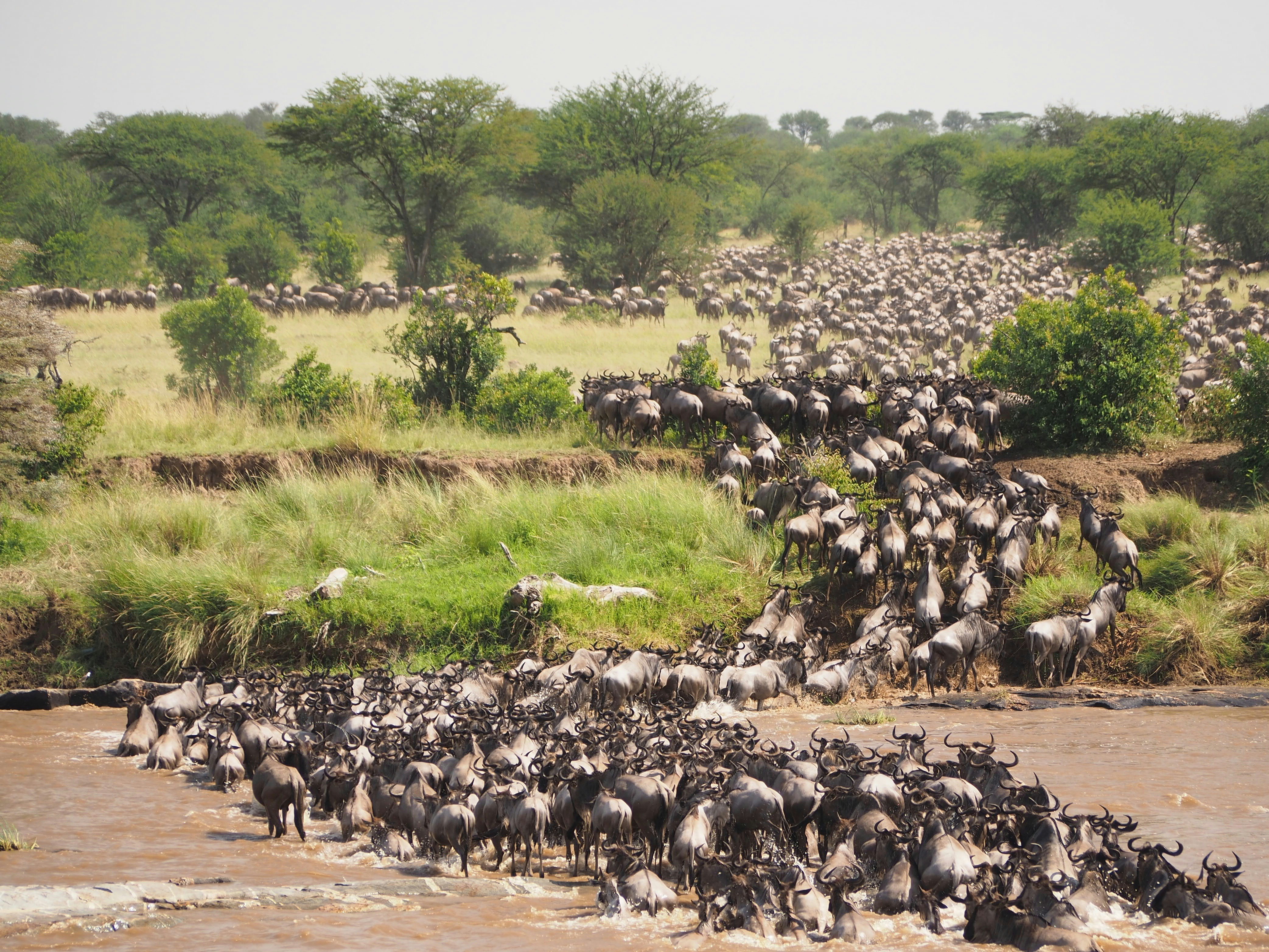
🐃 Wildebeest
The wildebeest is the symbol of the Serengeti.
The ecosystem supports approximately 1.5–2 million wildebeest, depending on the population estimate and area being considered. They participate in the famous annual migration in search of fresh grass and water.
🦓 Zebra
Hundreds of thousands of zebras move through the Serengeti ecosystem as part of the broader migration.
They often travel alongside wildebeest and gazelles.
🦒 Giraffes
Giraffes can be found throughout different parts of the park, particularly around woodland and savannah areas.


🐘 Elephants
Serengeti supports populations of African elephants, which can be seen in grasslands and woodland areas.
UNESCO’s description of the ecosystem includes thousands of elephants among its large herbivore populations.
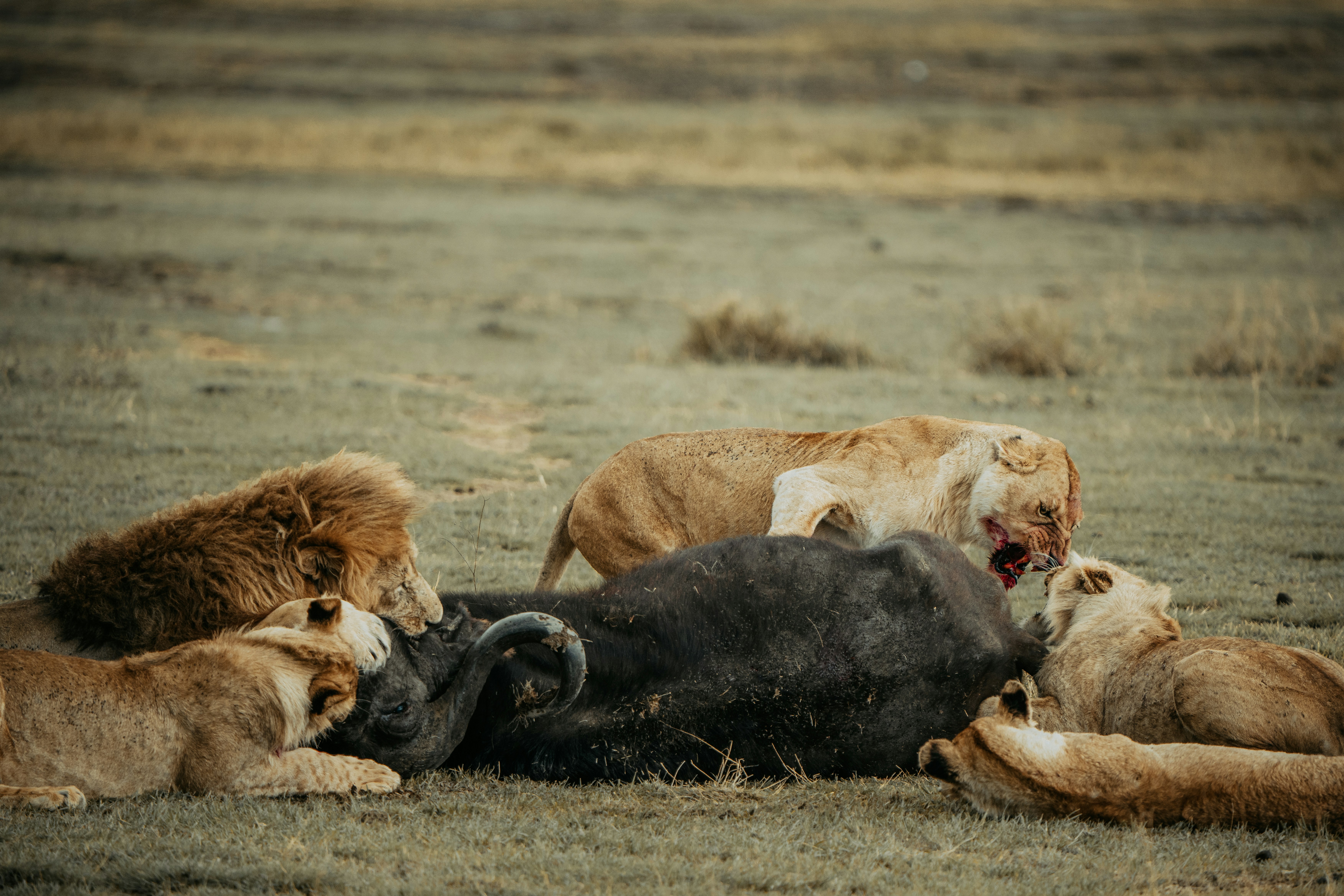
🦁 Lions
Serengeti is one of Africa’s great destinations for seeing lions.
Large prides can be found around areas where prey is abundant, and the park’s open landscape can provide excellent opportunities for observing them.
UNESCO identifies lions among the major predators of the Serengeti ecosystem.
🐆 Leopards
The African leopard is another major predator found in Serengeti.
They are more elusive than lions and are often associated with areas containing trees and rocky habitats.
🐆 Cheetahs
The open grasslands provide excellent habitat for cheetahs, which use their speed to hunt smaller and medium-sized prey.
Cheetah is among the globally threatened species highlighted by UNESCO for the Serengeti.
🐕 African Wild Dogs
African wild dogs are present within the broader Serengeti ecosystem, although sightings can be much less predictable than lions, elephants or wildebeest.
They are among the threatened species identified by UNESCO.
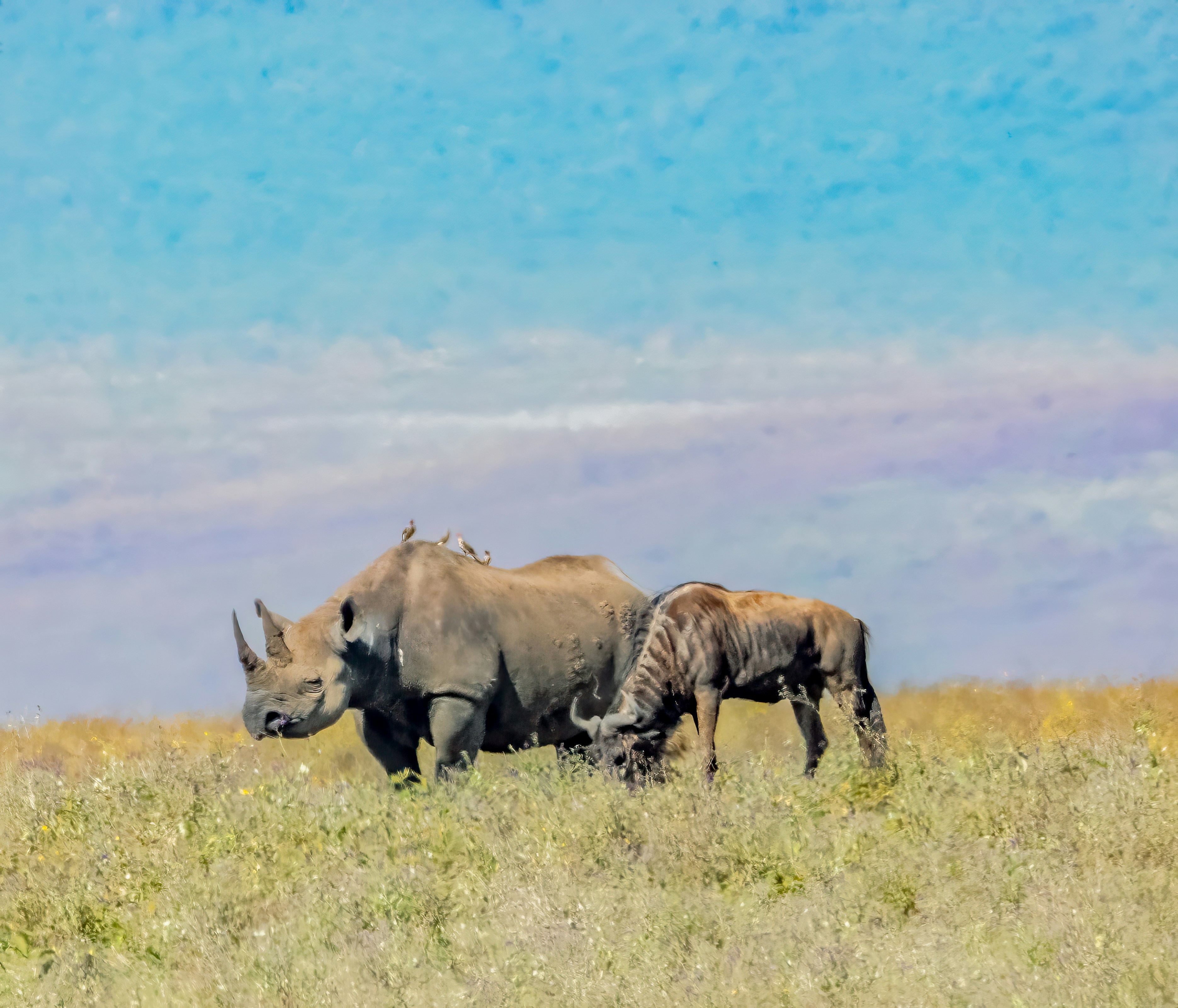
🦏 Black Rhinoceros
The black rhinoceros is one of Serengeti’s rare and endangered animals.
They are particularly associated with areas such as the Moru Kopjes and surrounding habitats.
🐾 Other Animals Found in Serengeti
Visitors may also encounter:
- Cape buffalo
- Hippopotamus
- Eland
- Topi
- Hartebeest
- Thomson’s gazelle
- Grant’s gazelle
- Warthog
- Waterbuck
- Impala
- Dik-dik
- Hyena
- Baboons
- Vervet monkeys
- Colobus monkeys
- Several species of antelope
UNESCO records at least 10 species of antelope and 10 species of primates in the ecosystem.
🦅 Birds of Serengeti
Serengeti is also an excellent destination for birdwatching.
There are more than 500 bird species recorded in the park, including resident and seasonal species.
Birds you may see include:
- African fish eagle
- Martial eagle
- Tawny eagle
- Secretary bird
- Kori bustard
- Ostrich
- Grey crowned crane
- Vultures
- Flamingos in suitable wetland areas
- Hornbills
- Bee-eaters
- Rollers
Serengeti also has an important population of ostriches.
🐃 The Great Wildebeest Migration


6
The Great Wildebeest Migration is Serengeti’s most famous attraction.
More than a million wildebeest, together with large numbers of zebras and gazelles, move through the Serengeti–Mara ecosystem in a continuous search for fresh grass and water. UNESCO describes the migration as one of the world’s largest remaining natural animal migrations.
The migration is not a single event that happens on one specific date. It is a year-round movement influenced by rainfall, water availability and fresh grazing.
Depending on the time of year, travelers may experience:
- Calving season
- Large grazing herds
- Predator activity
- River crossings
- Movement toward the northern Serengeti
- Return toward the southern plains
🌅 What Makes Serengeti Special?
Serengeti is not only about the number of animals. It is the combination of wildlife, landscape and natural processes that makes it exceptional.
⭐ Great Migration
One of the world’s greatest wildlife spectacles.
⭐ Big Five
Visitors have the opportunity to see lion, leopard, elephant, buffalo and rhinoceros.
⭐ Huge Predator Population
The abundance of herbivores supports large populations of lions, leopards, cheetahs, hyenas and other predators.
⭐ Endless Plains
The open grasslands create the classic African safari landscape.
⭐ Kopjes
These ancient granite rock formations provide spectacular scenery and are important habitats for wildlife.
⭐ Birdlife
More than 500 bird species make Serengeti attractive to birdwatchers.
🌍 Serengeti as a UNESCO World Heritage Site
Serengeti was designated a UNESCO World Heritage Site in 1981 because of its exceptional biodiversity, ecological importance and the spectacular annual migration.
UNESCO describes the Serengeti plains as supporting one of the world’s most impressive remaining large-mammal migrations and one of the most significant predator-prey ecosystems.
🚙 Why Visit Serengeti With Swallowtail Adventure?
For Swallowtail Adventure, Serengeti can be positioned as the centerpiece of a Tanzania safari.
Visitors can experience:
Game Drives → Explore the plains in a 4×4 safari vehicle and search for wildlife.
Great Migration → Follow the movement of wildebeest, zebra and gazelles.
Big Five Safari → Search for lions, leopards, elephants, buffalo and rhinos.
Predator Experiences → Look for lions, cheetahs, leopards and hyenas.
Bird Watching → Discover Serengeti’s remarkable bird diversity.
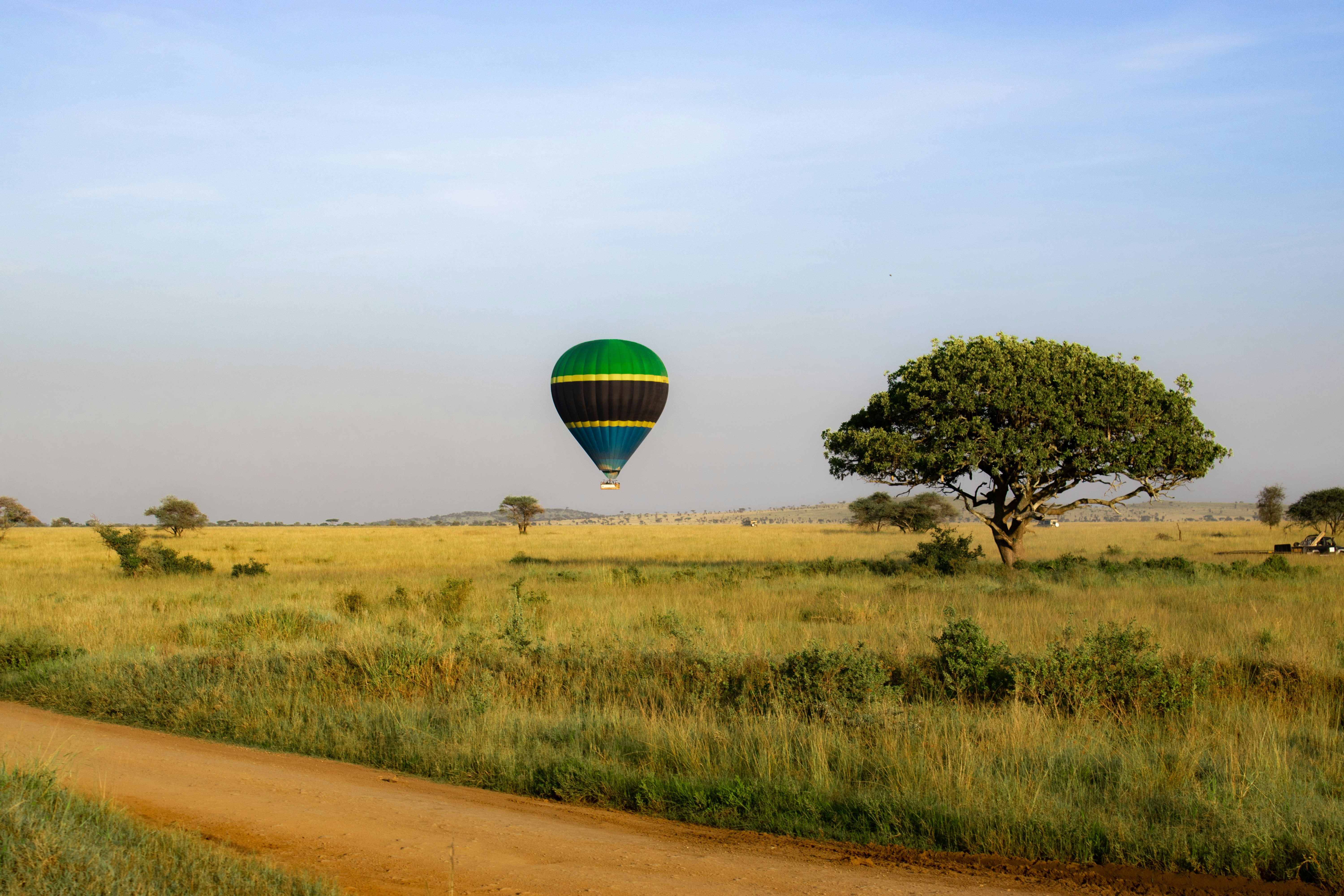
Balloon Safari → Experience the Serengeti from above at sunrise, where available.
Photography Safari → Capture wildlife, landscapes, sunsets and the dramatic atmosphere of the African savannah.