Ngorongoro Crater – Tanzania’s Wildlife Wonderland
Overview
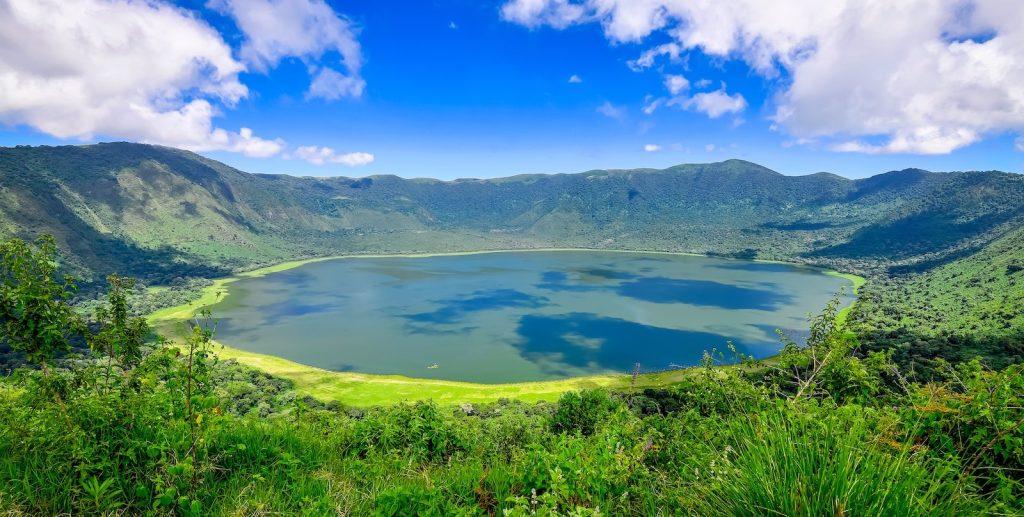
Ngorongoro Crater is one of Tanzania’s most extraordinary natural attractions and one of the world’s most famous wildlife destinations. Located in northern Tanzania, within the Ngorongoro Conservation Area, the crater is a spectacular natural amphitheater surrounded by steep walls and filled with grasslands, forests, wetlands and a permanent water supply.
The crater was formed millions of years ago when a massive volcano collapsed after a major eruption. Today, its fertile floor supports a remarkable concentration of wildlife, making it one of the best places in Tanzania for a wildlife safari.
The Ngorongoro Conservation Area is also an important home of the Maasai people, who continue to live and practice traditional pastoralism within the conservation area.
📍 Where Is Ngorongoro Crater Located?
Ngorongoro Crater is located in northern Tanzania, approximately:
- 190 km from Arusha
- Around 60 km from Lake Manyara
- Around 100 km from Serengeti’s central areas, depending on the route
- Within the Ngorongoro Conservation Area
It forms an important part of Tanzania’s Northern Safari Circuit, making it easy to combine with Serengeti, Tarangire and Lake Manyara.
🌋 How Was Ngorongoro Crater Formed?
Ngorongoro was once a huge volcanic mountain, believed to have been comparable in scale to some of the world’s largest volcanoes.
After a massive volcanic eruption, the mountain’s summit collapsed inward, creating the enormous caldera we see today.
The result is a natural enclosure surrounded by steep crater walls.
The crater is approximately:
- 12–14 km wide
- Around 610 metres deep
- Approximately 260 km² in area
Its relatively enclosed environment provides excellent conditions for wildlife viewing.
🦁 Wildlife in Ngorongoro Crater
One of the main reasons travelers visit Ngorongoro is the extraordinary concentration of wildlife within the crater.
Animals commonly seen include:
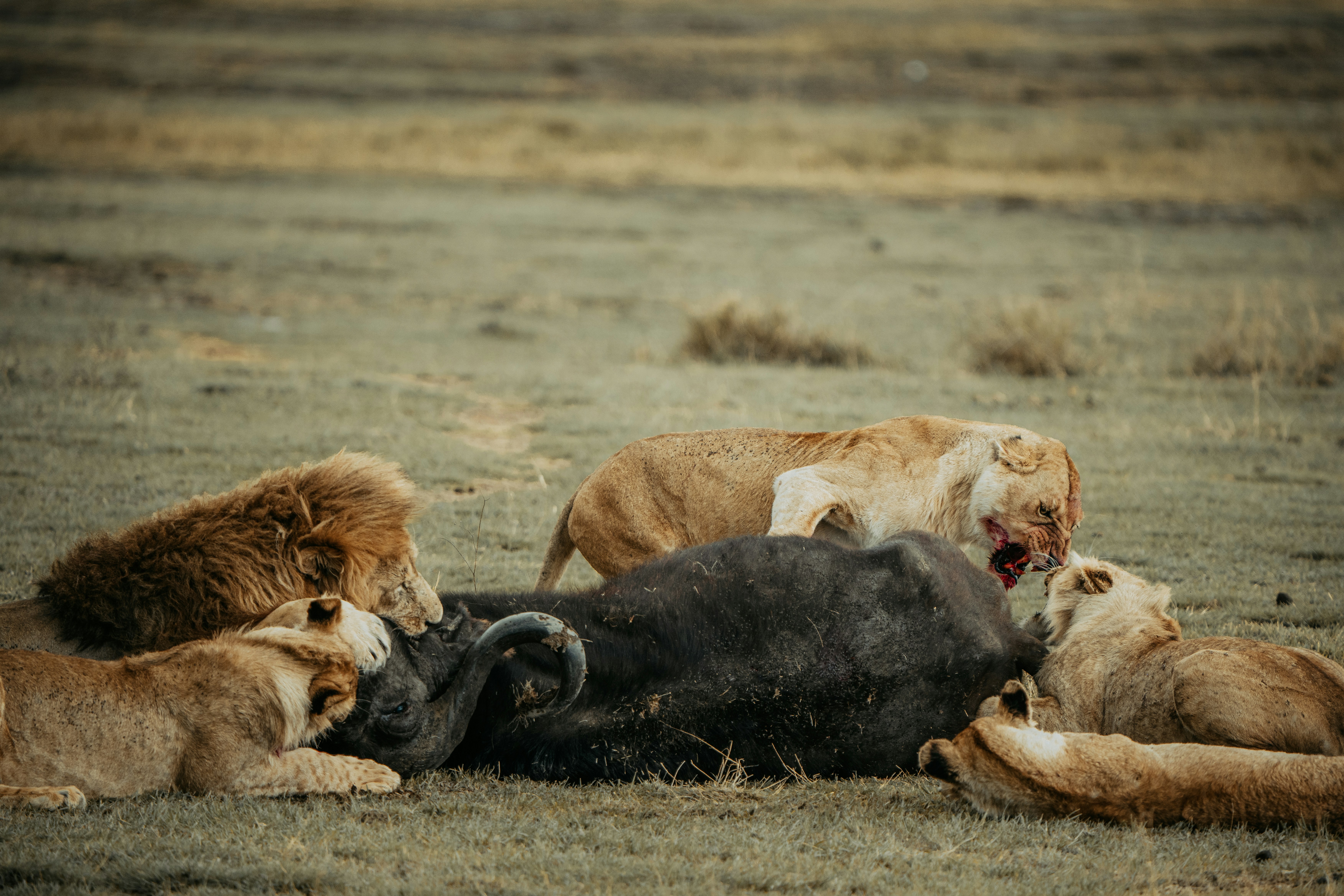
🦁 Lions
Ngorongoro is well known for its resident lion population. The open grasslands can provide excellent opportunities to observe prides hunting, resting and interacting.
🐘 Elephants
Elephants can be found within the conservation area, although large bull elephants are more commonly encountered in the crater than large breeding herds.
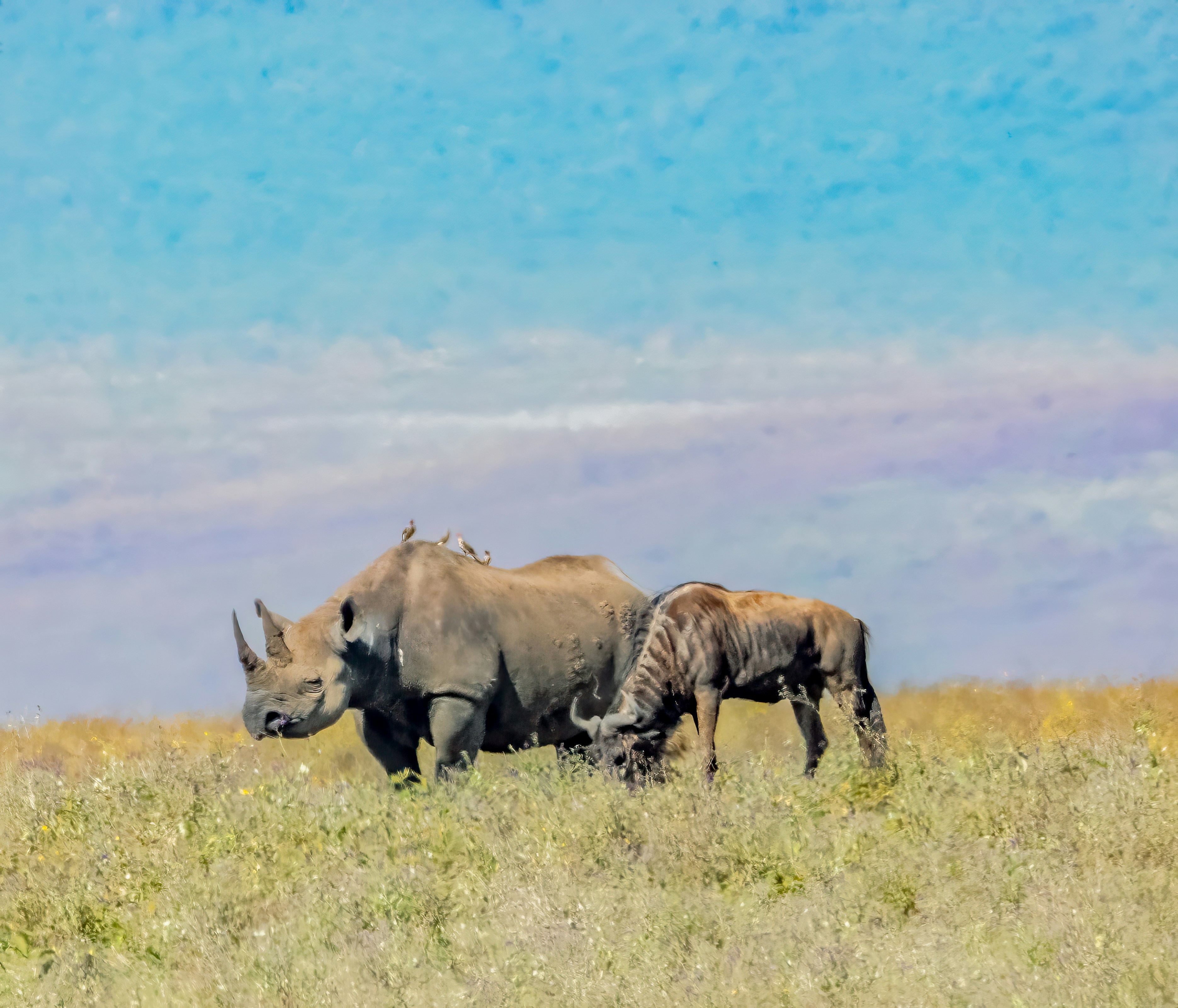
🦏 Black Rhinoceros
The crater is one of the places in Tanzania where visitors have a good chance of seeing the critically endangered black rhinoceros.
🐃 Cape Buffalo
Large numbers of buffalo inhabit the crater’s grasslands and surrounding habitats.
🦓 Zebras
Zebras are commonly seen grazing across the crater floor.
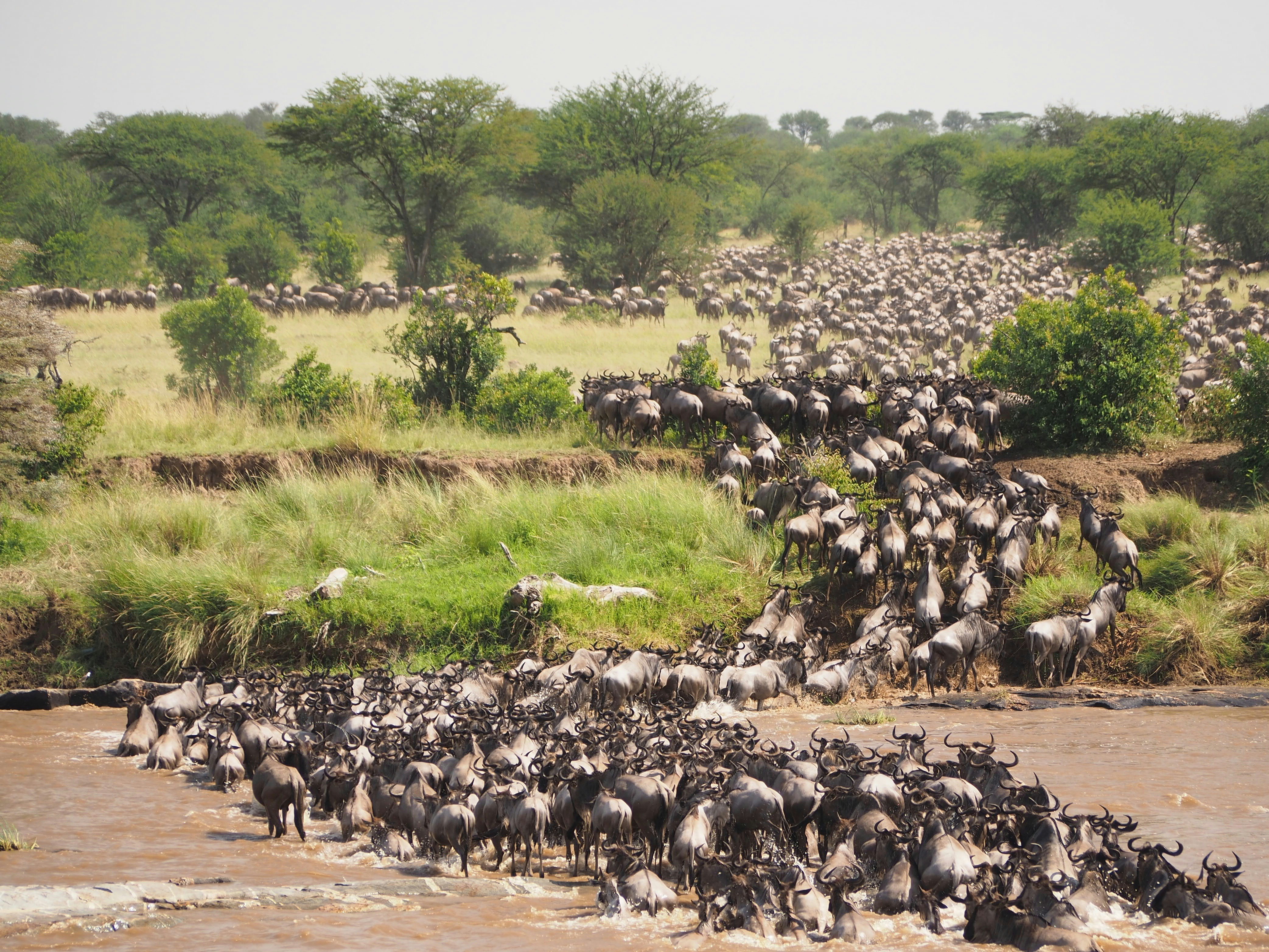
🦬 Wildebeest
Wildebeest are among the abundant herbivores found within the crater.
🦛 Hippopotamus
Hippos can be found in the crater’s wetlands and water sources.
🦒 Giraffes
Giraffes are found in the wider Ngorongoro Conservation Area, but they are generally absent from the crater floor because of the steep crater walls.
🐆 Leopards
Leopards occur in the conservation area, although they are more difficult to spot than lions.
🐕 Hyenas
Spotted hyenas are commonly encountered and are important predators and scavengers in the crater ecosystem.
🦩 Flamingos
Flamingos can sometimes be seen around the crater’s lakes and wetlands, particularly where conditions are suitable.
Other animals include:
- Grant’s gazelle
- Thomson’s gazelle
- Eland
- Warthog
- Jackals
- Hippos
- Baboons
- Ostriches
- Various antelope species
- More than 100 bird species
🏆 Big Five Safari
Ngorongoro is one of the best places in Tanzania to search for the Big Five:
Lion ✓
Elephant ✓
Buffalo ✓
Leopard ✓
Black rhinoceros ✓
However, wildlife is wild and sightings can never be guaranteed.
🌿 Ngorongoro Conservation Area
It is important to distinguish between Ngorongoro Crater and the Ngorongoro Conservation Area.
The Ngorongoro Conservation Area is much larger than the crater itself, covering approximately 8,292 km².
It contains:
- Ngorongoro Crater
- Olmoti Crater
- Empakaai Crater
- Olduvai Gorge
- Extensive highland forests
- Grasslands
- Archaeological sites
- Maasai communities
The area is unique because it combines wildlife conservation, human habitation and traditional pastoralism.
🧑🏿🌾 Maasai Culture
The Ngorongoro Conservation Area is also home to Maasai communities.
Visitors can learn about traditional Maasai life, including:
- Traditional livestock keeping
- Cultural traditions
- Local crafts
- Traditional dances
- Village life
- Maasai history
Cultural visits should be arranged respectfully and through appropriate local community arrangements.
🦴 Olduvai Gorge
One of the most important archaeological sites in the area is Olduvai Gorge.
It is famous for discoveries related to early human evolution and has provided important evidence about ancient human ancestors and prehistoric life.
For travelers interested in archaeology and human history, Olduvai Gorge can be an excellent addition to a Northern Circuit safari.
🚙 Ngorongoro Crater Safari
A typical crater safari starts early in the morning.
Morning
Drive from your lodge toward the crater rim and descend into the crater with your safari vehicle.
Mid-Morning
Explore the crater floor, searching for lions, elephants, buffalo, zebras, wildebeest, rhinos and other wildlife.
Lunch
Enjoy a picnic lunch at an authorized picnic area, depending on the safari itinerary and current park regulations.
Afternoon
Continue exploring the crater before beginning the ascent toward the crater rim.
Evening
Return to your lodge or continue toward your next destination, such as Serengeti or Karatu.
⭐ Main Highlights
- Ngorongoro Crater
- Big Five wildlife viewing
- Black rhinoceros
- Large lion population
- Vast crater floor
- Spectacular crater viewpoints
- Maasai cultural experiences
- Olduvai Gorge
- Highlands and forests
- Birdwatching
- Scenic landscapes
🗓️ Best Time to Visit
Ngorongoro can be visited throughout the year.
June – October
Generally dry conditions and excellent wildlife-viewing opportunities.
November – December
Short rains can bring fresh vegetation and beautiful scenery.
January – February
Often a particularly interesting period for combining Ngorongoro with the wider Northern Circuit and nearby calving-season experiences.
March – May
The long rains can bring fewer visitors, lush landscapes and dramatic skies, although some roads and activities can be affected by heavy rainfall.
🏕️ How Long Should You Stay?
For many safari itineraries, one full crater safari day is enough to experience the major highlights.
However, staying 1–2 nights around the crater or Karatu area allows you to explore the surrounding conservation area and combine the crater with other attractions.
Why Visit Ngorongoro With Swallowtail Adventure?
At Swallowtail Adventure, we combine wildlife, scenery and culture to create memorable Northern Tanzania safari experiences.
A Ngorongoro safari can easily be combined with:
Tarangire → Lake Manyara → Ngorongoro → Serengeti
This makes Ngorongoro an essential stop for travelers looking for the classic Tanzania Northern Circuit Safari.
Our Ngorongoro experiences can include:
✓ Private safari
✓ Group safari
✓ Family safari
✓ Honeymoon safari
✓ Big Five wildlife viewing
✓ Maasai cultural experiences
✓ Olduvai Gorge visits
✓ Professional safari guide
✓ 4×4 safari vehicle
✓ Accommodation options
✓ Airport transfers
✓ Customized itineraries