Arusha National Park – Tanzania’s Mountain & Wildlife Escape
Overview
Arusha National Park is one of Tanzania’s most diverse national parks, located just outside Arusha City in northern Tanzania. Although relatively small, the park offers an exceptional combination of mountains, forests, crater landscapes, lakes, savannah and wildlife.
The park is particularly famous for Mount Meru, Tanzania’s second-highest mountain at approximately 4,566 metres, as well as the beautiful Momella Lakes and the spectacular Ngurdoto Crater.
Arusha National Park is an excellent destination for travelers who have limited time but want to experience wildlife, nature and mountain scenery in one place.
📍 Where Is Arusha National Park?
Arusha National Park is located in northern Tanzania, in the Arusha Region.
It is approximately:
- 25–35 km from Arusha City
- Around 40–50 km from Kilimanjaro International Airport, depending on the route
- Near Mount Meru
- Close to the starting point of many Northern Tanzania safari itineraries
Its location makes it one of the most convenient national parks to visit from Arusha.
🗓️ When Was Arusha National Park Established?
The park has a history that dates back several decades.
The area around Ngurdoto Crater was first protected as a game sanctuary in the early 20th century and later became a game reserve.
In 1960, Ngurdoto Crater was established as a national park.
When Mount Meru and the Momella area were incorporated in 1967, the park became what is now known as Arusha National Park.
Today, it is managed by the Tanzania National Parks Authority (TANAPA).
📏 How Large Is Arusha National Park?
Arusha National Park covers approximately 552 km².
Despite its relatively small size, the park contains several very different environments:
- Montane forests
- Grasslands
- Savannah
- Wetlands
- Lakes
- Crater landscapes
- Alpine vegetation
- Mountain slopes
This exceptional variety is one of the park’s main attractions.
🏔️ Mount Meru
The most prominent feature of the park is Mount Meru, which rises to approximately 4,566 metres above sea level.
It is the second-highest mountain in Tanzania after Mount Kilimanjaro.
Mount Meru is an excellent trekking destination and is sometimes used by climbers as an acclimatization trek before attempting Kilimanjaro.
The mountain offers:
- Forest trekking
- Wildlife encounters
- Spectacular views
- High-altitude landscapes
- Beautiful sunrise and sunset experiences
- Views toward Mount Kilimanjaro on clear days
🌋 Ngurdoto Crater
Ngurdoto Crater is one of Arusha National Park’s most spectacular natural features.
The crater is a large volcanic caldera surrounded by steep forest-covered walls.
Its floor contains grasslands and wetlands that attract wildlife.
Animals that may be seen around the crater include:
- Buffalo
- Warthogs
- Elephants
- Zebras
- Baboons
- Antelope
- Various bird species
There are viewpoints around the crater where visitors can enjoy panoramic views.
💧 Momella Lakes
The Momella Lakes are a group of shallow alkaline lakes located within the park.
Different lakes can have different colors depending on their mineral composition, water levels and seasonal conditions.
The lakes attract many bird species, including flamingos and other waterbirds.
They also provide beautiful scenery against the backdrop of Mount Meru.
🦒 Wildlife in Arusha National Park
Although Arusha is not primarily known as a Big Five destination, it has a diverse wildlife population.
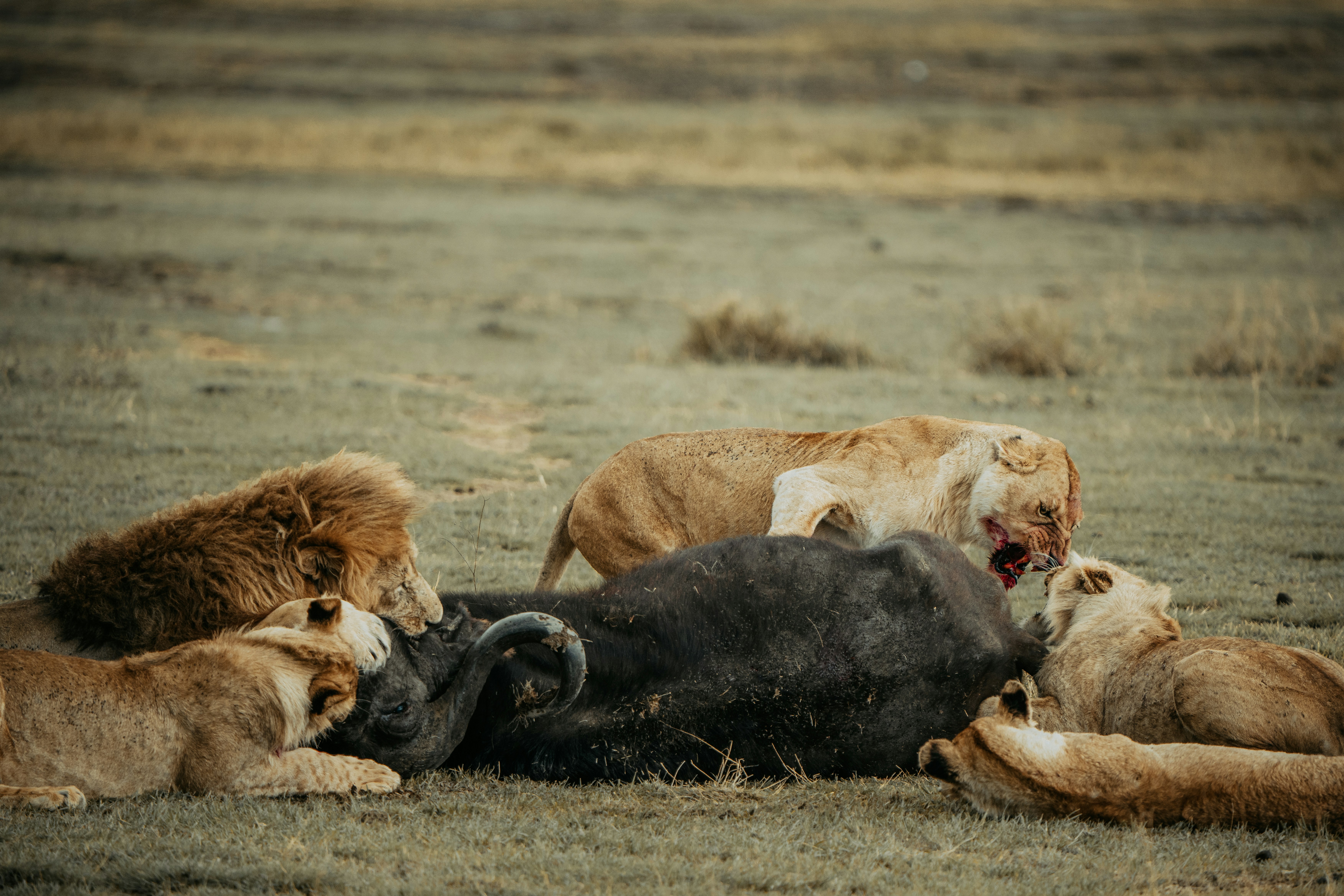
🐃 Buffalo
Cape buffalo are commonly found around the park’s grasslands and crater areas.
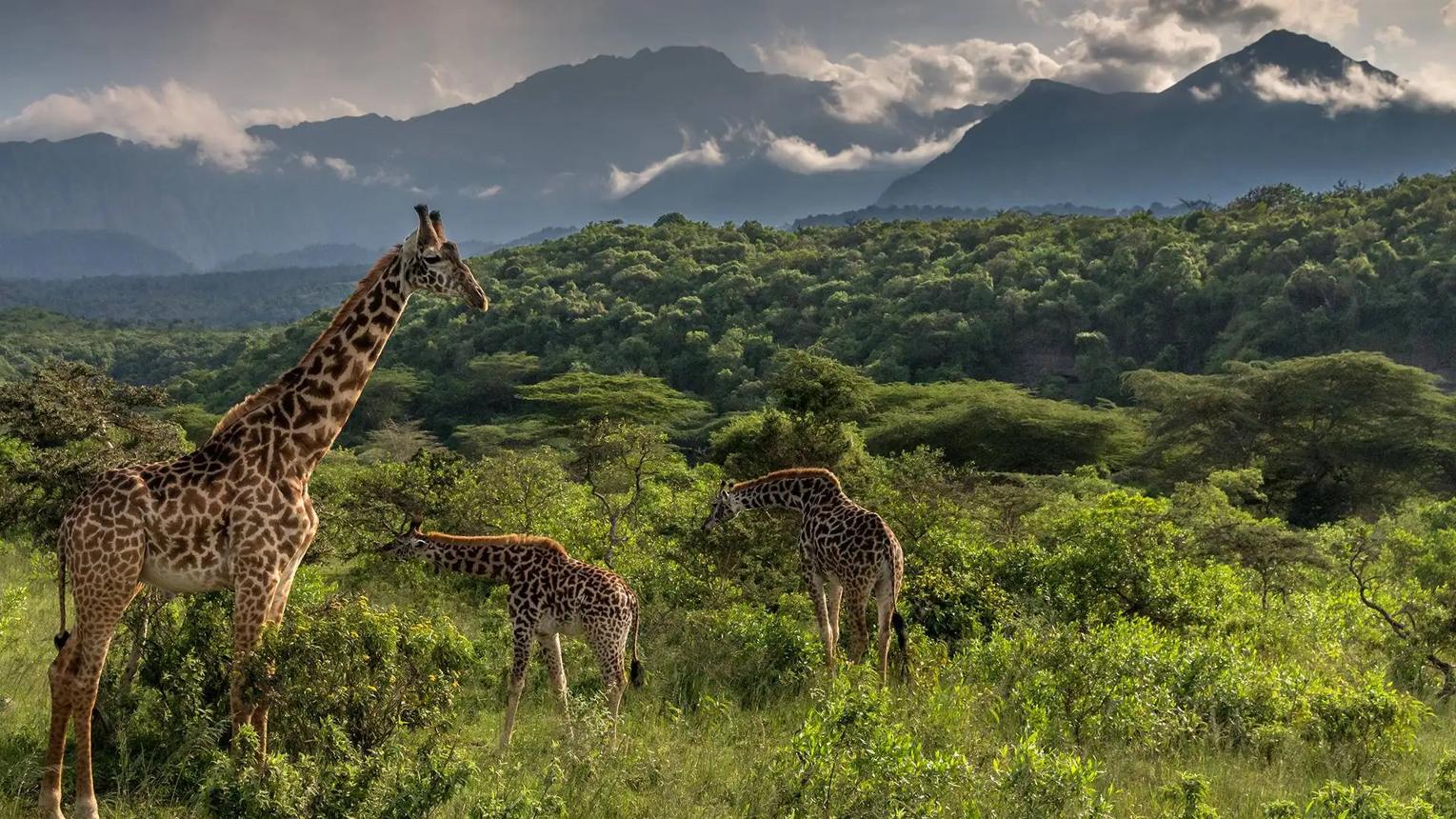
🦒 Giraffes
Arusha National Park is particularly well known for its giraffes.
They can often be seen feeding in open grasslands.
🐘 Elephants
Elephants occur in the park and can sometimes be encountered during game drives.
🦓 Zebras
Zebras are commonly seen grazing across open areas.
🐗 Warthogs
Warthogs are often found in grasslands and open woodland.
🐒 Baboons
Baboons are common, particularly around forest edges and open areas.
🐒 Monkeys
The park is especially interesting for primate lovers.
Visitors may see:
- Blue monkeys
- Colobus monkeys
- Baboons
- Vervet monkeys
The forest environment provides excellent habitat for these species.
🐆 Other Wildlife
Other animals that can be found in the park include:
- Bushbuck
- Waterbuck
- Common duiker
- Reedbuck
- Eland
- Hippos
- Hyenas
- Leopards
- Various smaller mammals
Predators such as leopards and hyenas are present but can be difficult to spot.
🦅 Birdlife
Arusha National Park is an excellent destination for birdwatching.
Its forests, lakes, wetlands and grasslands support many different species.
Birds you may encounter include:
- Flamingos
- African fish eagle
- Crowned crane
- Hartlaub’s turaco
- Hornbills
- Sunbirds
- Kingfishers
- Herons
- Egrets
- Storks
- Various forest birds
The park is particularly attractive to birdwatchers because of the combination of montane forest and wetland habitats.
🌿 Main Landscapes
🌳 Montane Forest
The lower slopes of Mount Meru contain lush forest with large trees, vines and abundant birdlife.
This is one of the best places in the park to look for monkeys and forest birds.
🌾 Savannah
Open grasslands support giraffes, zebras, buffalo and antelope.
🌊 Wetlands
Wetlands around the Momella Lakes provide habitat for hippos and numerous waterbirds.
🌋 Crater Landscapes
Ngurdoto Crater offers dramatic scenery and excellent wildlife-viewing opportunities.
🏔️ Alpine Zone
Higher elevations on Mount Meru contain distinctive high-altitude vegetation and spectacular mountain scenery.
🚙 Things to Do in Arusha National Park
🦒 Game Drives
Explore the park in a 4×4 safari vehicle and search for giraffes, buffalo, zebras, elephants, warthogs and other wildlife.
🚶 Walking Safari
One of Arusha National Park’s biggest advantages is the opportunity for guided walking experiences in designated areas.
Walking allows travelers to experience the environment differently from a traditional game drive.
🏔️ Mount Meru Trekking
For adventure travelers, climbing Mount Meru is one of the park’s major attractions.
🛶 Canoeing
Canoeing experiences may be available on the Momella Lakes, depending on current park regulations and conditions.
This can provide a unique way to observe wildlife and birds from the water.
🦅 Birdwatching
Explore the forest and lakes looking for resident and migratory bird species.
📸 Photography
Mount Meru, giraffes, crater landscapes and Momella Lakes provide excellent photography opportunities.
🗓️ Best Time to Visit
June – October ⭐⭐⭐⭐⭐
Generally dry conditions make this an excellent period for wildlife viewing, hiking and outdoor activities.
November – December
Short rains can create beautiful green landscapes and excellent birdwatching conditions.
January – February
Often a good period for hiking and combining Arusha National Park with other Northern Circuit destinations.
March – May
The long rains bring lush scenery, although wet conditions can affect some activities and roads.
🏔️ Best Time for Mount Meru Trekking
For Mount Meru trekking, the drier months are generally preferred:
June–October
January–February
These periods usually provide better trekking conditions and clearer mountain views, although weather at high altitude can change quickly.
🏕️ How Long Should You Stay?
1 Day – Safari
Perfect for travelers with limited time.
1 Day – Canoeing & Game Drive
A good combination for travelers who want both wildlife and a unique lake experience.
2 Days / 1 Night
Allows more time to explore the park at a relaxed pace.
3–4 Days – Mount Meru Trek
Ideal for travelers who want to climb Mount Meru.
🚗 How to Get to Arusha National Park
Because it is so close to Arusha City, the park is extremely convenient to access.
From Arusha City
The drive to the park entrance usually takes around 45 minutes to 1.5 hours, depending on the entrance and your exact starting point.
From Kilimanjaro International Airport
The park can also be reached relatively easily from Kilimanjaro International Airport.
This makes it an excellent first activity after arriving in Tanzania.
⭐ Main Highlights
✓ Mount Meru
✓ Tanzania’s second-highest mountain
✓ Ngurdoto Crater
✓ Momella Lakes
✓ Giraffes
✓ Buffalo
✓ Elephants
✓ Zebras
✓ Warthogs
✓ Hippos
✓ Colobus monkeys
✓ Blue monkeys
✓ Flamingos
✓ Excellent birdwatching
✓ Walking safaris
✓ Canoeing
✓ Game drives
✓ Mountain trekking
✓ Beautiful views of Kilimanjaro on clear days
🆚 Arusha National Park vs Tarangire
| Arusha National Park | Tarangire National Park |
|---|---|
| 552 km² | About 2,850 km² |
| Very close to Arusha | Around 2–3 hours from Arusha |
| Famous for Mount Meru | Famous for elephants and baobabs |
| Walking opportunities | Excellent game drives |
| Momella Lakes | Tarangire River |
| Ngurdoto Crater | Open savannah |
| Excellent for hiking | Excellent for wildlife concentration |
| Forest and mountain landscapes | Savannah and woodland |
🌍 Why Visit Arusha National Park With Swallowtail Adventure?
Arusha National Park is perfect for travelers who want to experience more than a traditional safari.
With Swallowtail Adventure, you can combine:
✓ Game drives
✓ Mount Meru trekking
✓ Walking safaris
✓ Canoeing
✓ Birdwatching
✓ Photography
✓ Ngurdoto Crater
✓ Momella Lakes
✓ Cultural experiences
✓ Northern Circuit safaris
We can also combine Arusha National Park with:
Arusha → Tarangire → Lake Manyara → Ngorongoro → Serengeti
or create a Mount Meru + Kilimanjaro adventure for travelers looking for a longer mount