Ruaha National Park – The Wild Heart of Tanzania
Overview
Ruaha National Park is one of Tanzania’s most spectacular and remote wildlife destinations. Located in central Tanzania, Ruaha is famous for its vast wilderness, dramatic landscapes, large elephant populations, ancient baobab trees and excellent predator sightings.
The park forms part of the much larger Rungwa–Ruaha ecosystem and is a major destination in Tanzania’s Southern Safari Circuit.
Compared with Serengeti and some of the more popular northern parks, Ruaha generally offers a more remote, wild and uncrowded safari experience.
📍 Where Is Ruaha National Park?
Ruaha National Park is located in central Tanzania, primarily in Iringa Region.
It is approximately:
- 130–150 km from Iringa town
- Around 600 km from Dar es Salaam by road, depending on the route
- South of the central Tanzanian highlands
- Part of the larger Ruaha–Rungwa ecosystem
Ruaha is commonly combined with other southern Tanzania destinations such as:
Ruaha → Nyerere National Park → Mikumi → Udzungwa Mountains
🗓️ When Was Ruaha National Park Established?
Ruaha’s protected-area history goes back to the early 20th century.
The area was initially protected as a game reserve and was later officially established as Ruaha National Park in 1964.
The park was later expanded through the incorporation of nearby protected areas, including Usangu Game Reserve and wetlands, creating a much larger protected landscape.
Today, Ruaha is managed by the Tanzania National Parks Authority (TANAPA).
📏 How Large Is Ruaha National Park?
Ruaha is one of Tanzania’s largest national parks.
The park covers approximately 20,226 km².
This enormous area makes Ruaha larger than:
- Serengeti National Park
- Tarangire National Park
- Lake Manyara National Park
- Arusha National Park
- Mikumi National Park
Its vast size contributes to the feeling of true wilderness and isolation.
🌊 The Great Ruaha River
The Great Ruaha River is one of the most important features of the park.
It provides water for wildlife, particularly during the dry season.
Animals often gather around rivers, pools and other remaining water sources when conditions become dry.
The river supports:
- Elephants
- Hippos
- Crocodiles
- Buffalo
- Antelope
- Birds
- Other wildlife
🐘 Ruaha – Land of Elephants
Ruaha is particularly famous for its large elephant population.
Large elephant herds can be seen moving through the park’s woodland and savannah.
The combination of:
Elephants + baobabs + open wilderness
creates one of Tanzania’s most impressive safari landscapes.
🦁 Wildlife in Ruaha National Park
Ruaha has an exceptional variety of wildlife.
🦁 Lions
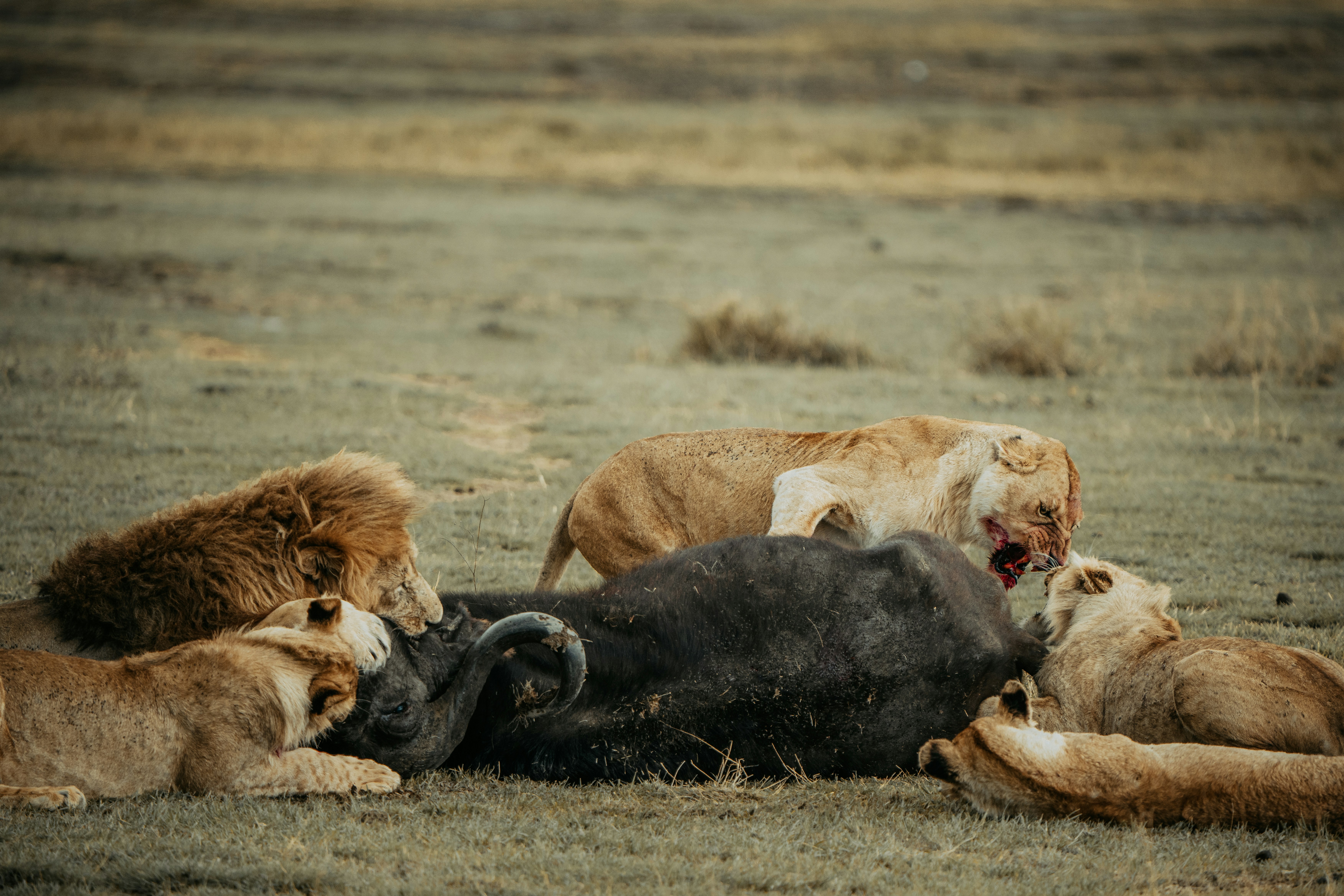
Ruaha is known for its strong lion population.
Large prides can sometimes be seen resting under trees, hunting or moving across the plains.
🐆 Leopards
Ruaha is a good destination for travelers interested in leopards.
They can often be found around rocky areas, riverine vegetation and woodland.
🐆 Cheetahs
Cheetahs can be seen in the park’s more open areas, where they use their speed to hunt.
🐕 African Wild Dogs
Ruaha is one of Tanzania’s important strongholds for African wild dogs.
Seeing a pack can be one of the most memorable experiences on a Ruaha safari.
🐘 Elephants
Large herds are one of Ruaha’s main attractions.
🦬 Buffalo
Cape buffalo can be found in large groups, particularly around water and grasslands.
🦒 Giraffes
Giraffes are widespread throughout the park.
🦓 Zebras
Zebras can be found in open grassland and savannah areas.
🦌 Special Antelope Species
Ruaha is particularly famous for its variety of antelope.
Visitors may encounter:
- Greater kudu
- Lesser kudu
- Sable antelope
- Roan antelope
- Eland
- Impala
- Waterbuck
- Grant’s gazelle
- Dik-dik
- Hartebeest
- Bushbuck
The greater kudu is one of Ruaha’s most sought-after species because of its impressive spiral horns.
🐊 Hippos & Crocodiles
The Great Ruaha River and other water sources provide habitat for:
- Hippopotamuses
- Nile crocodiles
- Waterbirds
- Fish
During the dry season, waterholes and river pools can become important wildlife-viewing locations.
🦅 Birds of Ruaha
Ruaha is an excellent destination for birdwatchers.
The park supports a large number of bird species, including:
- African fish eagle
- Bateleur
- Martial eagle
- Tawny eagle
- Vultures
- Secretary bird
- Kori bustard
- Hornbills
- Lilac-breasted roller
- Bee-eaters
- Kingfishers
- Storks
- Herons
- Egrets
The combination of woodland, grassland, rivers and wetlands creates diverse habitats for birds.
🌳 Baobab Trees
One of Ruaha’s most distinctive features is its spectacular baobab trees.
These ancient trees are scattered across the landscape and can grow to enormous sizes.
The scenery of:
giant baobabs + elephants + golden savannah + rocky hills
makes Ruaha particularly attractive to photographers.
🌿 Ruaha’s Landscapes
The park contains a remarkable variety of habitats.
🌾 Open Grasslands
Important grazing areas for zebras, antelope, wildebeest and other herbivores.
🌳 Miombo Woodlands
These woodlands provide habitat for many animals and birds.
🌴 Acacia Woodland
Important for giraffes, elephants and various antelope species.
🏔️ Rocky Hills
The park’s rocky landscapes provide shelter and excellent viewpoints.
🌊 Rivers & Wetlands
These provide critical water sources for wildlife.
🚙 Things to Do in Ruaha
🦁 Game Drives
Game drives are the main activity.
Explore the enormous wilderness with an experienced guide and search for elephants, lions, leopards, wild dogs, buffalo and antelope.
📸 Wildlife Photography
Ruaha’s remote landscapes and dramatic wildlife provide excellent photography opportunities.
🦅 Birdwatching
Explore different habitats while looking for resident and migratory birds.
🚶 Walking Safari
Guided walking experiences may be available in designated areas and offer a completely different perspective of the wilderness.
🌅 Sunset Safari
The park’s vast landscapes and baobab-lined plains can provide spectacular sunset experiences.
🗓️ Best Time to Visit Ruaha
June – October ⭐⭐⭐⭐⭐
Generally the best period for wildlife viewing.
As water becomes scarce, animals concentrate around rivers, pools and remaining water sources.
November – February
The landscape becomes greener and birdlife is excellent.
This can be a beautiful time for photographers and birdwatchers.
March – May
The long rains bring lush landscapes, but some roads can become difficult and some safari camps may operate seasonally.
🐘 Best Time for Wildlife Concentration
If your main goal is to see large concentrations of wildlife, especially around water, June to October is generally the strongest period.
The dry season creates a natural concentration around the Great Ruaha River and other water sources.
🏕️ How Long Should You Stay?
Because Ruaha is so large, spending more than one day is highly recommended.
3 Days / 2 Nights
Good for a short introduction.
4 Days / 3 Nights ⭐
A very good option for travelers who want enough time for several game drives.
5–7 Days
Excellent for travelers who want a deeper wilderness experience and more opportunities to explore different parts of the park.
✈️ How to Get to Ruaha
By Air
Flying is generally the most convenient option for travelers with limited time.
Ruaha is served by safari airstrips with connections to destinations such as Dar es Salaam, Arusha and other safari areas, depending on the airline and season.
By Road
Ruaha can also be reached by road, particularly as part of a longer Southern Tanzania safari.
Road travel takes considerably longer than flying but allows travelers to combine several destinations.
🌍 Ruaha vs Serengeti
| Ruaha | Serengeti |
|---|---|
| Central Tanzania | Northern Tanzania |
| About 20,226 km² | About 14,763 km² |
| Remote wilderness | Famous classic safari destination |
| Large elephant population | Famous Great Migration |
| Excellent wild dog opportunities | Excellent migration & predator viewing |
| Famous for kudu and other antelope | Famous for wildebeest and predators |
| Generally fewer tourists | Generally more visitors |
| Southern/Central Safari Circuit | Northern Safari Circuit |
⭐ Main Highlights of Ruaha
✓ Large elephant herds
✓ Lions
✓ Leopards
✓ Cheetahs
✓ African wild dogs
✓ Greater kudu
✓ Lesser kudu
✓ Sable antelope
✓ Roan antelope
✓ Giraffes
✓ Buffalo
✓ Zebras
✓ Hippos
✓ Crocodiles
✓ Great Ruaha River
✓ Ancient baobabs
✓ Diverse birdlife
✓ Huge wilderness
✓ Walking safari opportunities
✓ Excellent photography
🦁 Why Visit Ruaha With Swallowtail Adventure?
Ruaha is ideal for travelers looking for a wild and less-crowded Tanzania safari.
With Swallowtail Adventure, we can create customized Ruaha experiences ranging from short wildlife adventures to extended Southern Circuit safaris.
Our Ruaha experiences can include:
✓ Private safaris
✓ Family safaris
✓ Honeymoon safaris
✓ Wildlife photography safaris
✓ Birdwatching safaris
✓ Walking safari experiences
✓ 3–7 day Ruaha safaris
✓ Ruaha + Nyerere
✓ Ruaha + Mikumi
✓ Ruaha + Udzungwa Mountains
✓ Safari + Zanzibar
✓ Professional safari guides
✓ 4×4 safari vehicles
✓ Accommodation
✓ Flights and transfers
✓ Customized itineraries